
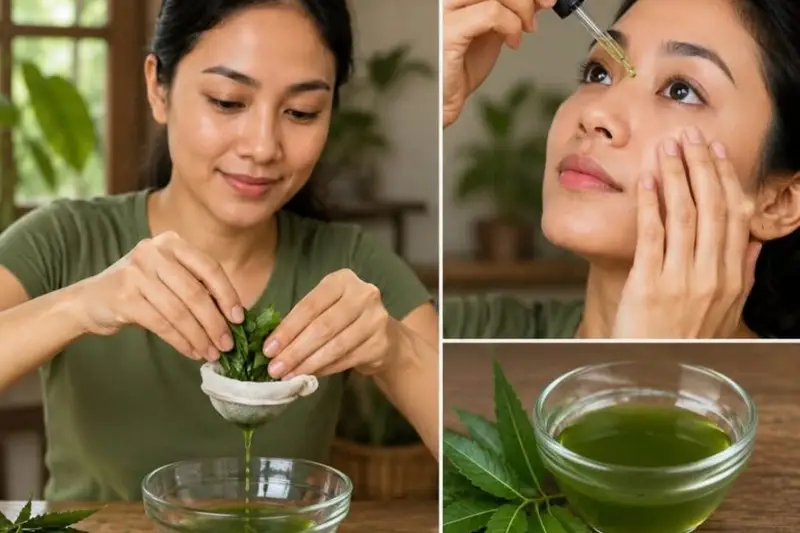
Neem leaves have been used in traditional medicine for generations, and they are often described online as a powerful natural remedy for inflammation, infections, skin problems, and other health concerns. More recently, social media posts have claimed that neem leaves can dramatically improve eyesight, remove cataracts, reduce dependence on glasses, and even help people avoid visiting an eye doctor.
These claims can sound convincing, especially when a homemade neem preparation is shown being placed around or near the eyes. But there is an important difference between traditional use and scientifically proven eye treatment.
Neem, also known as Azadirachta indica, contains several biologically active compounds and has been studied for a variety of potential health applications. However, there is not enough reliable clinical evidence to show that neem leaves can restore lost vision, eliminate the need for prescription glasses, reverse cataracts, or cure serious eye diseases.
Cataracts, for example, occur when the normally clear lens inside the eye becomes cloudy. This can cause blurred vision, glare, difficulty seeing at night, and gradually reduced eyesight. A homemade herbal preparation has not been established as a treatment that can dissolve or reverse a cataract. When cataracts significantly interfere with daily life, an ophthalmologist can evaluate the condition and discuss appropriate treatment options.
One of the biggest concerns with the viral neem-eye remedy is not simply whether it works, but whether it is safe to put homemade plant preparations directly into the eye.
The surface of the eye is extremely delicate. Commercial eye drops are manufactured under controlled conditions because products used in the eye need to meet strict sterility and quality requirements. A liquid made by boiling, soaking, crushing, or filtering neem leaves at home cannot be assumed to be sterile. Even if the water looks clean, microorganisms or particles may remain.
Putting a contaminated liquid into the eye can potentially cause irritation, inflammation, or an eye infection. A painful or infected eye may require prescription eye drops, medical evaluation, or other treatment, depending on the cause.
This is particularly important for people who already have dry eyes, allergies, glaucoma, cataracts, diabetic eye disease, retinal problems, previous eye surgery, or unexplained changes in vision. Trying a homemade remedy first could delay appropriate eye care.
There is also a common misconception that because neem is a natural plant, every preparation made from it must be harmless. Natural substances can contain powerful chemical compounds, and their safety depends on the preparation, concentration, route of exposure, and individual circumstances. Neem products have been associated with adverse effects, particularly when concentrated neem oil is swallowed.
That does not mean neem has no traditional or scientific interest. Researchers continue to study neem because of its antimicrobial, anti-inflammatory, and other biological properties. But laboratory activity or traditional use does not automatically mean that a plant can safely treat a particular human eye condition.
For people looking for better eye health, the most useful approach is to focus on habits that have established benefits. Eating a balanced diet containing vegetables, fruits, whole grains, fish, nuts, and other nutrient-rich foods can support overall health. Protecting the eyes from excessive ultraviolet exposure with appropriate sunglasses can also be helpful. Avoiding smoking is another important step because smoking is associated with several serious eye conditions.
Regular eye examinations are especially important as people get older or when they have conditions such as diabetes or high blood pressure. An eye examination can identify problems that may not cause obvious symptoms in the early stages.
People who wear glasses should also understand that needing corrective lenses is not necessarily a sign that something is wrong with the health of the eyes. Nearsightedness, farsightedness, astigmatism, and age-related changes in focusing are common vision problems. Glasses or contact lenses correct the way light is focused; drinking a particular herbal preparation does not reliably eliminate these refractive errors.
The same principle applies to cataract treatment. There is currently no proven homemade neem recipe that can replace professional cataract evaluation or established medical treatment.
Anyone experiencing sudden vision loss, severe eye pain, significant redness, new flashes of light, a sudden increase in floaters, a curtain-like shadow across the vision, or a rapidly worsening change in eyesight should seek urgent medical attention rather than experimenting with a home remedy.
Neem remains an interesting traditional medicinal plant, but claims that neem leaf water can restore eyesight, remove cataracts, or make millions of people independent of eye doctors go far beyond the available evidence. When it comes to vision, protecting the eyes and obtaining proper eye care is far safer than putting an unsterile homemade preparation directly into them.