
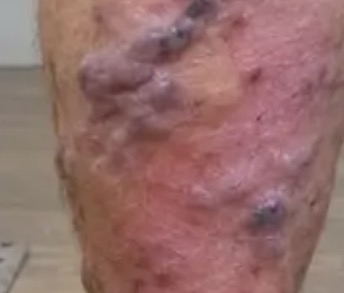
When your legs feel heavy, cold, swollen, or tired by the end of the day, even simple tasks can start to feel frustrating. Many older adults notice that walking gets harder, shoes feel tighter, and veins seem more visible than before. It is easy to assume this is just “part of aging,” but the truth is more nuanced than that. In many cases, circulation in the legs can be supported with small, consistent habits that help blood move more efficiently and reduce that drained, stuck feeling. And there is one surprisingly simple routine later in this article that many people overlook.
Why Leg Circulation Changes After 80
As we age, the blood vessels in the legs naturally become less flexible. Arteries may narrow over time, while veins can lose some of their ability to push blood upward against gravity. That combination can leave the lower legs feeling heavy, swollen, or easily fatigued.
The calf muscles also play a major role. They are often called the body’s “second heart” because every time they contract, they help squeeze blood back up toward the chest. But when someone sits for long periods or walks less, that pump becomes less active. Research shows that regular movement can help support healthier blood flow responses in older adults.
But that is not the full story. Even small movements, repeated often, can make a meaningful difference in how the legs feel throughout the day.
Arterial Narrowing vs. Venous Pooling
Not all circulation problems feel the same. Some are related to reduced blood flow through the arteries, while others are caused by blood pooling in the veins. Knowing the difference matters because the support strategies are not identical.
Common signs of arterial circulation problems
Arterial issues often show up as pain or cramping in the calves during walking, feet that feel cool, weaker pulses, or sores that heal slowly. In medical settings, doctors may use a test called the ankle-brachial index, or ABI, to help assess blood flow in the legs.
Common signs of venous pooling
Venous problems more often cause swelling around the ankles, a heavy or aching feeling that worsens later in the day, and visible bulging veins. These symptoms may improve when the legs are elevated.
Here is where it gets interesting. Some habits can support both systems at once, especially those that activate the calf muscles and reduce pressure in the lower legs.