
There is something comforting about ending the day with a warm cup of herbal tea. The gentle aroma, the warmth of the mug in your hands, and a few quiet minutes away from a busy schedule can make an ordinary evening feel special.
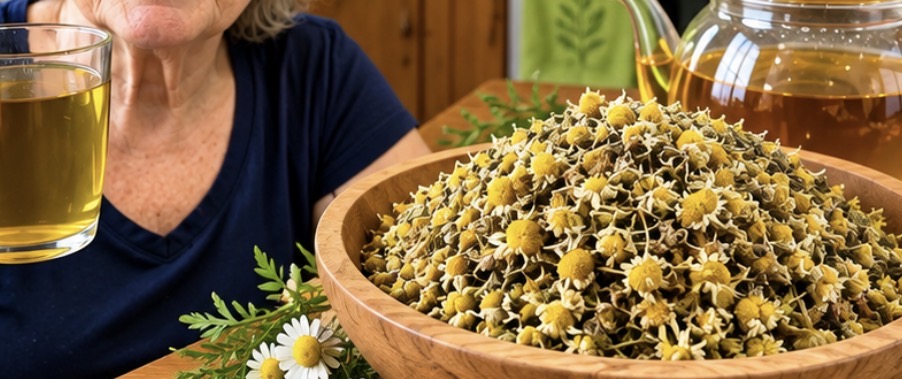
The image above features a homemade herbal tea prepared with dried chamomile flowers. Chamomile is one of the most popular herbs used for caffeine-free tea, and its mild floral flavor makes it an excellent choice for an evening beverage.
You may also see recipes online claiming that a particular tea can make swollen legs, ankles, or feet “disappear overnight.” It is important to be careful with those claims. A tea cannot be guaranteed to eliminate swelling, because swelling can have many different causes. Persistent or unexplained swelling should be evaluated by a healthcare professional rather than treated solely with a home remedy.
That said, a warm cup of chamomile tea can be a pleasant addition to a relaxing nighttime routine.
Why Chamomile Tea Is So Popular
Chamomile has been used traditionally as an herbal infusion for generations. The flowers have a delicate fragrance and a naturally sweet, slightly apple-like flavor.
Unlike black tea, green tea, and many other traditional teas, chamomile is naturally caffeine-free. This makes it particularly appealing to people who prefer to avoid caffeine in the evening.
A simple cup requires only a few ingredients:
- Dried chamomile flowers
- Freshly boiled water
- Optional honey
- Optional lemon
- Optional fresh mint
The preparation takes only a few minutes.
Ingredients
For 1 large cup
- 1 tablespoon dried chamomile flowers
- 250–300 ml freshly boiled water
- 1 teaspoon honey, optional
- 1 small slice of lemon, optional
- 2–3 fresh mint leaves, optional
For a stronger batch, you can increase the amount of chamomile slightly, but there is no need to make the tea extremely concentrated.
Choosing Your Chamomile
When purchasing dried chamomile, look for culinary or tea-grade flowers from a reputable source. The flowers should have a pleasant herbal aroma and should be stored in an airtight container away from moisture, heat, and direct sunlight.
Chamomile tea bags can also be used if you do not have loose flowers. Simply follow the preparation instructions on the package.
How to Make Chamomile Tea
Step 1: Boil the Water
Bring approximately 250–300 ml of water to a boil.
For the best flavor, use fresh water rather than repeatedly reheated water. Once the water reaches a boil, allow it to sit for a few seconds before pouring it over the flowers.
Step 2: Add the Chamomile
Place the dried chamomile flowers into a teapot, tea infuser, or heatproof cup.
Pour the hot water directly over the flowers, making sure they are completely submerged.
Step 3: Cover and Steep
Cover the cup or teapot and allow the chamomile to steep for approximately 5–10 minutes.
Covering the tea while it steeps helps preserve its delicate aroma.
If you prefer a lighter flavor, steep for around five minutes. For a more pronounced floral taste, allow it to steep closer to ten minutes.
Step 4: Strain
If you used loose chamomile flowers, strain the tea through a fine tea strainer.
Pour the clear golden tea into your favorite mug.
Step 5: Add Optional Ingredients
You can enjoy chamomile tea exactly as it is, or customize it.
A small amount of honey adds natural sweetness. A little lemon provides brightness and acidity, while fresh mint gives the tea a cool herbal note.
Avoid adding too many ingredients at once. Chamomile has a subtle flavor that can easily become overwhelmed.
A Simple Evening Version
For a relaxing evening drink, try this combination:
1 tablespoon dried chamomile + 300 ml hot water + 1 teaspoon honey + a small slice of lemon.
Steep the chamomile for 7–8 minutes, strain, and allow the tea to cool slightly before adding honey.
This creates a gently floral drink with a mild sweetness and refreshing citrus note.
You can enjoy it after dinner or as part of your bedtime routine.
Can Chamomile Tea Reduce Swollen Legs?
This is where it is important to separate a traditional home recipe from a medical claim.
Swelling in the legs, ankles, or feet—often called edema—can have many possible causes. Standing or sitting for long periods, hot weather, certain medications, injuries, and other conditions can contribute to swelling.
Some causes are relatively minor, while others require medical evaluation.
Although drinking a warm herbal tea may contribute to normal hydration and can be enjoyable as part of a healthy routine, there is not enough evidence to say that chamomile tea will make swollen legs disappear overnight.
The dramatic “before and after” style often used in social-media posts should therefore not be interpreted as proof that the tea caused the change.
If your legs or ankles are regularly swollen, particularly if the swelling is new or unexplained, consider speaking with a healthcare professional.
When Leg Swelling Needs Medical Attention
Do not rely on herbal tea alone if swelling is significant or persistent.
Seek prompt medical advice if swelling:
- Appears suddenly
- Is severe or worsening
- Occurs mainly in one leg
- Is accompanied by pain, redness, or warmth
- Continues without an obvious explanation
- Keeps returning
- Occurs together with shortness of breath or chest discomfort
Sudden swelling accompanied by difficulty breathing or chest pain can be an emergency and requires immediate medical attention.
The goal of a recipe like this should be comfort and enjoyment, not replacing appropriate medical care.
How to Make the Tea More Flavorful
Chamomile is naturally mild, so there are several easy ways to change its flavor.
Chamomile and Mint
Add two or three fresh mint leaves while steeping. The result is refreshing and especially pleasant after a meal.
Chamomile and Lemon
Add a thin lemon slice after straining. Lemon adds a bright, slightly tangy flavor that balances the floral notes.
Chamomile and Honey
Honey is one of the simplest additions. Add it after the tea has cooled slightly so you can adjust the sweetness to your preference.
Chamomile and Ginger
A very thin slice of fresh ginger can give chamomile tea a warmer, spicier character.
Chamomile and Cinnamon
A small piece of cinnamon stick can add a naturally sweet, aromatic flavor. Remove it before drinking.
Tips for the Best Cup
The quality of the ingredients makes a noticeable difference.
Use fresh water. Water that has been sitting in a kettle for a long time may produce a flatter flavor.
Don’t over-steep. Very long steeping can make herbal tea taste stronger or more bitter than necessary.
Cover the cup. This helps retain the aromatic compounds responsible for chamomile’s characteristic fragrance.
Use a fine strainer. Small chamomile particles can otherwise float throughout the cup.
Adjust the strength. There is no perfect strength for everyone. Start with a moderate amount of flowers and adjust the next cup according to your taste.
How to Store Dried Chamomile
Dried chamomile should be stored in an airtight container.
Keep it in a cool, dry, dark cupboard. Avoid storing it next to the stove, sink, or another location exposed to heat and moisture.
Proper storage helps preserve the herb’s aroma and flavor.
If the flowers develop an unusual smell, visible moisture, mold, or other signs of spoilage, discard them.
Important Safety Considerations
Chamomile is generally used as a beverage, but “natural” does not automatically mean that something is appropriate for everyone.
People who are allergic to plants in the daisy, ragweed, chrysanthemum, or related plant families may need to be cautious with chamomile.
If you are pregnant, breastfeeding, taking medications, or have a medical condition, ask a qualified healthcare professional whether chamomile tea is appropriate for you, particularly if you plan to drink large quantities or use concentrated herbal products.
Herbal tea should also not be used as a substitute for prescribed treatment.
A Relaxing Nighttime Routine
One of the nicest ways to enjoy this recipe is to turn it into a small evening ritual.
Prepare your tea about 30–60 minutes before you want to relax. While it steeps, put away your phone for a few minutes, dim the lights, and find a comfortable place to sit.
Drink the tea slowly rather than treating it like something you need to finish quickly.
The value of a simple herbal drink isn’t necessarily in a dramatic overnight transformation. Sometimes the benefit is simply creating a calm moment at the end of a long day.
Frequently Asked Questions
Can I drink chamomile tea every night?
Many people enjoy chamomile tea regularly, but individual suitability varies. If you have allergies, take medication, are pregnant or breastfeeding, or have an ongoing health condition, check with a healthcare professional before making it a daily habit.
Should I drink it hot or cold?
Both work. Hot chamomile tea is particularly comforting in the evening, while chilled chamomile tea can be refreshing during warm weather.
Can I add honey?
Yes. Honey is an optional sweetener and pairs especially well with chamomile.
Can chamomile tea replace water?
It can contribute to your daily fluid intake, but plain water should still be an important part of your hydration routine.
Will this tea cure swollen ankles?
No. There is no reliable basis for promising that this recipe will cure or permanently eliminate swollen ankles. Swelling can have many causes and sometimes requires medical evaluation.
Final Recipe
Soothing Chamomile Evening Tea
Prep time: 2 minutes
Steeping time: 5–10 minutes
Total time: About 10 minutes
Servings: 1
Ingredients
- 1 tablespoon dried chamomile flowers
- 250–300 ml freshly boiled water
- 1 teaspoon honey, optional
- 1 lemon slice, optional
- 2–3 mint leaves, optional
Directions
- Boil the water.
- Place the dried chamomile flowers into a cup or teapot.
- Pour the hot water over the flowers.
- Cover and steep for 5–10 minutes.
- Strain into a clean mug.
- Add honey, lemon, or mint if desired.
- Allow the tea to cool to a comfortable drinking temperature.
- Enjoy slowly as part of a relaxing evening routine.
The Bottom Line
Chamomile tea is a simple, fragrant, caffeine-free beverage that can be prepared in minutes. Its gentle flavor makes it an excellent choice for people looking for a relaxing evening drink.
However, viral claims that a particular tea can make swollen legs, ankles, and feet “vanish forever” should be treated with skepticism. Swelling is a symptom, not a single disease, and the underlying cause matters.
Enjoy this recipe for what it is: a comforting herbal drink—not a guaranteed treatment for swelling. If you experience persistent, sudden, painful, or unexplained swelling, especially when accompanied by breathing problems or chest pain, seek appropriate medical care rather than relying on a home remedy.